Refugees Telling Their Own Stories 난민, 자신의 이야기를 전하는 사람들 |
|
|
분쟁과 강제이주를 경험한 이들을 환대하는 교류의 공간을 운영하는 한옥커즈는 뉴스 브리프로 여러분을 찾아갑니다.
Hanokers, a welcoming space for those who have experienced conflict and forced displacement, brings you the Hanokers Newsbrief.
|
|
|
✉️ 목차 / Table of Contents
🎈 다가오는 행사들 Upcoming Events
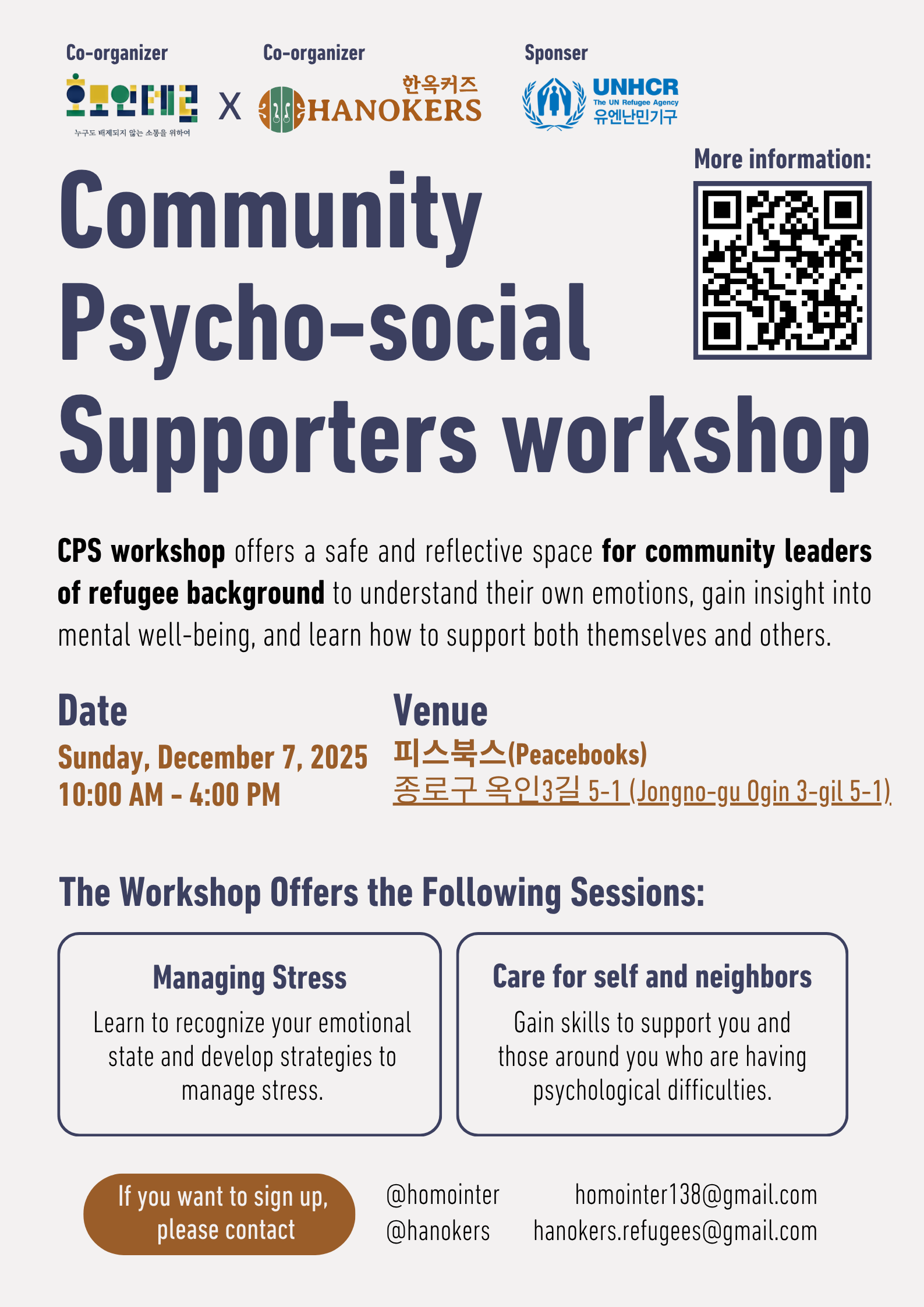
- 📅 (12/7) [호모인테르×한옥커즈] CPS 워크숍
[Hanokers×HomoInter] Community Psycho-social Support
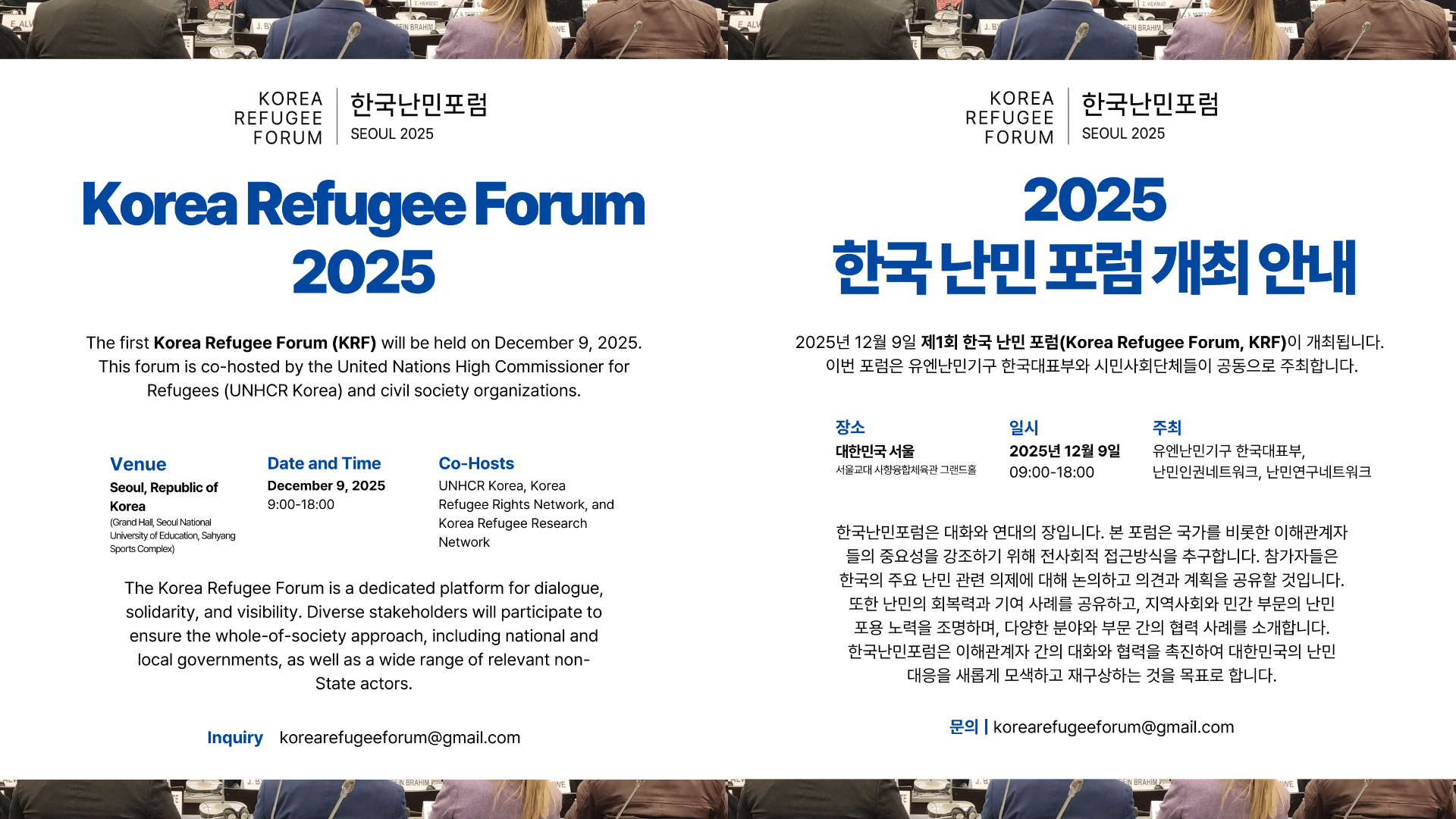
- 📅 (12/9) 2025 한국 난민 포럼 - 한국, 서울에서 첫 난민 포럼의 개최가 예정되다
Korea Refugee Forum 2025 - Korea to Host First-Ever Refugee Forum in Seoul
📣 11월의 한옥커즈 소식 Our activities in November
💡 한옥커즈 이야기 Members' Activities
✍️ 기고문 Contributions
- 🌹나탈리의 코너 - '한국인'이라는 단어에 대하여
Nathalie’s Corner - What it means to be “Korean”
|
|
|
🎈 다가오는 행사들 Upcoming Events
|
|
|
💝 (12/7)
[호모인테르×한옥커즈] CPS 워크숍
[HomoInter×Hanokers] Community Psycho-social Support |
|
|
📍 행사 정보 | Information of event
🗓️ 일시 | Date & Time
2025년 12월 7일 (일) | 오전 10시 – 오후 4시
Sunday, December 7, 2025 | 10:00 AM – 4:00 PM
📍 장소 | Venue
피스북스 (서울 종로구 옥인3길 5-1)
Peace Books (5-1 Okin 3-gil, Jongno-gu, Seoul)
📬 Contact | 문의
- Email: hanokers.refugees@gmail.com / homointer@gmail.com
- Instagram DM: @hanokers / @homointer |
|
|
🎙️ (12/9)
[UNHCR Korea] 2025 한국 난민 포럼
[UNHCR Korea] Korea Refugee Forum 2025 |
|
|
🎯 행사 소개 | About the Event
한국은 오는 12월 9일, 서울교대에서 처음으로 ‘코리아 난민 포럼(Korea Refugee Forum)’을 개최합니다. 이번 행사는 12월 15~17일 스위스 제네바에서 열리는 글로벌 난민 포럼(Global Refugee Forum) 중간 점검 회의를 앞두고 마련된 자리입니다.
이번 첫 포럼은 한국 내 난민 이슈뿐 아니라 국제적 난민 논의를 위한 대화와 연대, 가시화의 장으로 기획되었습니다. 주최 측은 정부기관, 시민사회, 난민 주도 단체, 종교계, 학계 전문가, 언론, 그리고 난민 당사자까지 모두 참여하는 ‘전 사회적 접근(Whole-of-Society Approach)’을 강조하고 있습니다. 다양한 목소리가 한 자리에 모임으로써 난민 보호에 대한 공공의 이해를 넓히고, 우수 사례를 공유하며, 지역·국제 차원의 협력을 더욱 강화하는 것이 목표입니다.
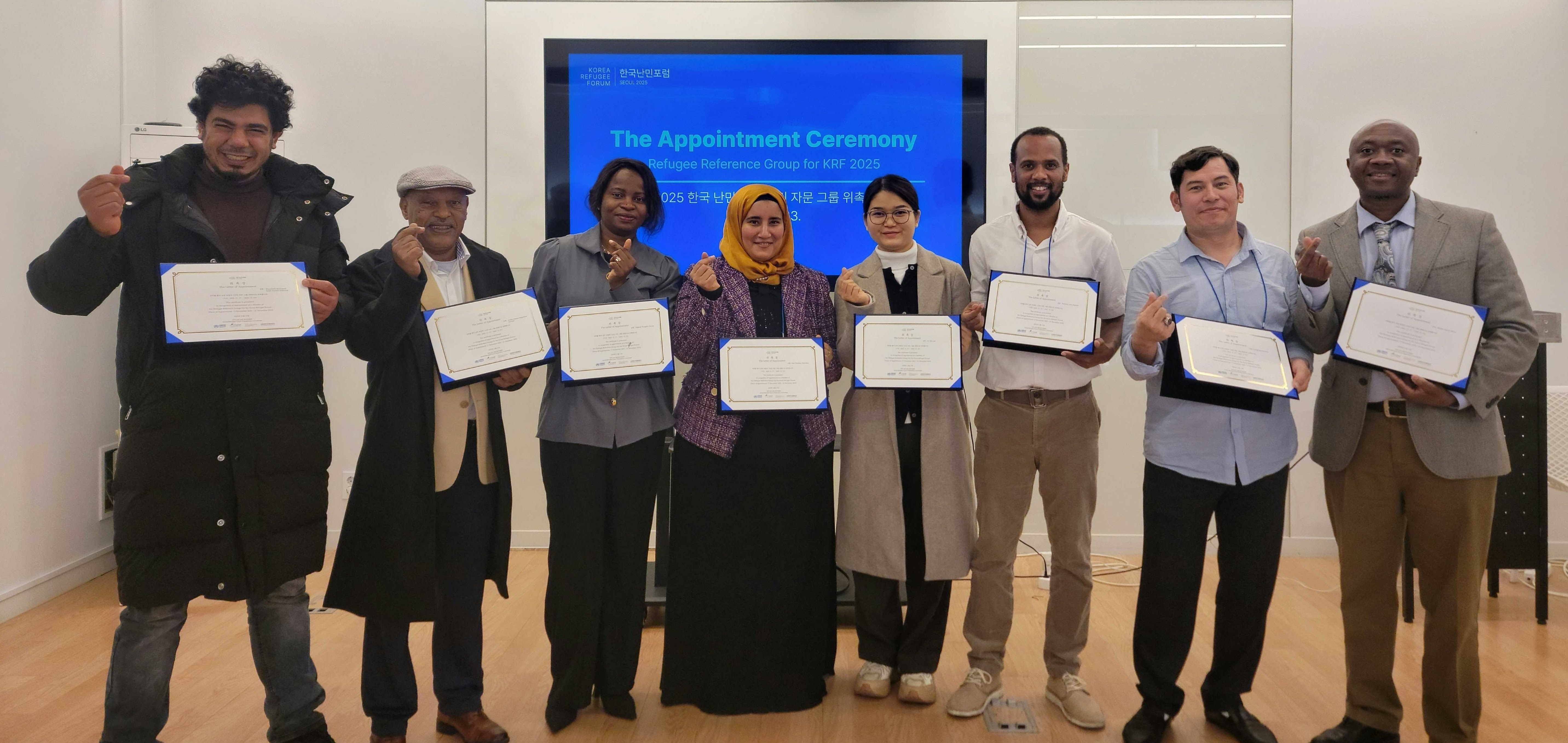
11월 23일, 포럼 조직위원회는 난민참여그룹(Refugee Reference Group, RRG)을 출범해 현재 한국에 거주하는 난민 배경의 10명을 위촉했습니다. 이 중에는 한옥커즈(Hanokers) 이사진인 도르카스(Dorcas)를 비롯해 스토리텔링 팀의 레자이(Rezayi), 레물러스(Remulus)도 포함되어 있습니다. 이 그룹은 포럼 준비 과정에서 정책, 지원 프로그램, 공론장에서 난민의 목소리가 더 많이 반영되도록 하고, 다양한 이해관계자 간의 긍정적 대화와 협력을 촉진하기 위해 만들어졌습니다. 이러한 노력을 통해 이번 포럼은 한국의 난민 관련 논의를 새롭게 바라보고 재구성하는 계기를 마련하고자 합니다.
South Korea will host its first-ever Korea Refugee Forum on December 9 at the Seoul National University of Education. The event comes ahead of the Global Refugee Forum Progress Review Meeting, scheduled for December 15–17 in Geneva, Switzerland.
The inaugural forum is designed to serve as a platform for dialogue, solidarity, and visibility for refugee issues in Korea and beyond. Organizers emphasize a Whole-of-Society Approach, encouraging participation from government institutions, civil society, refugee-led initiatives, religious communities, academic experts, the media, and refugees themselves. By bringing diverse voices together, the forum aims to deepen public understanding of refugee protection, highlight best practices, and foster stronger cooperation at both local and international levels.
On November 23, the forum organizers launched the Refugee Reference Group (RRG), appointing 10 individuals with refugee backgrounds who are currently living in Korea. Among them are Hanokers board member Dorcas, as well as storytelling team members Rezayi and Remulus. The group was formed to ensure that it reflects more refugee voices in policies, support programs, and public discussions in the forum’s preparation process and to foster a positive dialogue and cooperation among various stakeholders. Through these efforts, the forum aims to rethink and reshape refugee-related issues in Korea. |
|
|
📍 행사 정보 | Information of event
🗓️ 일시 | Date & Time
2025년 12월 9일 (화) 9:00-18:00
Tuesday, December 9, 2025, 9:00-18:00
📍 장소 | Venue
서울시 , 서울교대 사향융합체육관 그랜드홀
Grand Hall, Seoul National University of Educatiom, Sahyang Sports Complex, Seoul
📬 Contact | 문의
Email: korearefugeeforum@gmail.com |
|
|
📣 11월의 한옥커즈 활동 Our activities in October |
|
|
1️⃣ 한옥커즈, 유학생들과 함께 '한국 미디어 속 난민 재현'을 논의하다
Hanokers discusses “Portrayal of Refugees in Korean Media” with international students |
|
|
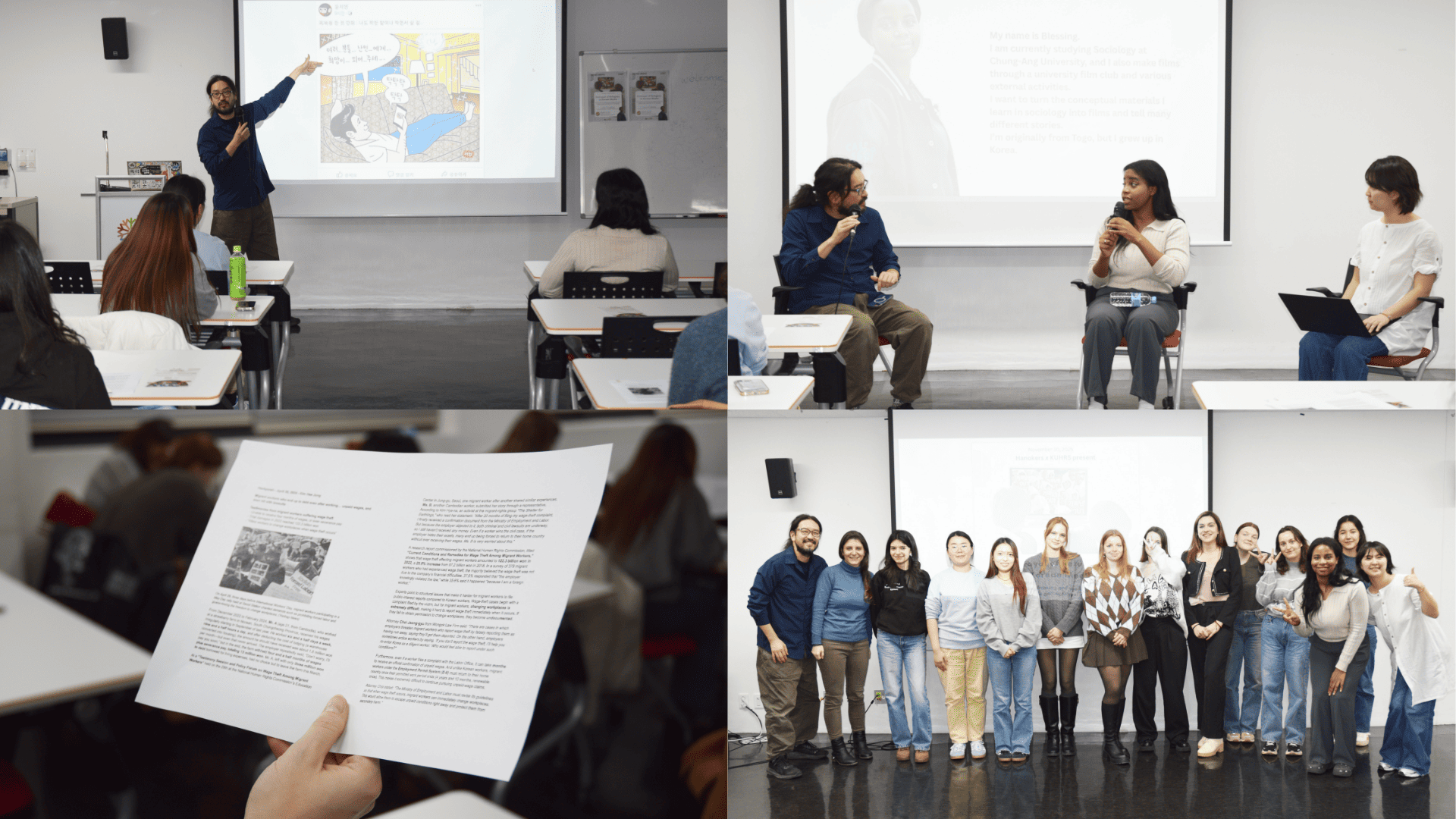
고려대학교 인권학생회(KUHRS)는 한옥커즈(Hanokers)와 함께 지난 11월 10일 서울창업허브에서 특별 강연 ‘한국 미디어 속 난민 재현(Portrayal of Refugees in Korean Media)’을 개최했습니다. 연세대·서강대·한국외대·고려대 학생들을 초청해 국내 주요 미디어가 난민을 어떤 방식으로 프레이밍하고, 그러한 보도 방식이 한국 사회의 정책과 여론 형성에 어떤 영향을 미치는지 살펴보는 자리였습니다. 강연 이후에는 토고 출신의 대학생이자 영화감독인 '요보 블레싱 그레이스(Yovo Blessing Grace)'와의 대화가 이어졌고, 이를 통해 한국 학생과 유학생들이 난민 배경을 가진 청년의 삶과 시선을 직접 듣는 소중한 기회를 가졌습니다.
발표에서 한옥커즈 공동대표 코난은 난민에 대한 한국 미디어의 재현이 대중 인식과 정치적 논쟁을 형성하는 데 핵심적인 역할을 하고 있다고 강조했습니다. 정치적 프레임, 두려움, 동정의 감정이 뒤섞여 있으며, 특히 보수 언론을 중심으로 난민을 위험 요소로 묘사하는 경향이 강하다고 설명했습니다. 범죄 위험, 문화적 갈등, 안전 문제를 과장하는 보도들이 대표적입니다. 참가자들은 실제 기사 사례를 함께 읽으며, ‘불법’ 혹은 ‘위험한’ 존재로 난민을 규정하는 프레임이 어떻게 해로운 고정관념을 강화하고 공적 담론을 왜곡하는지를 논의했습니다.
한편, 학생들은 긍정적이고 균형 잡힌 보도의 사례도 함께 살펴보며, 언론이 보다 인간적인 이야기를 전하는 데 어떤 역할을 할 수 있는지도 토론했습니다. 한국에는 규모는 작지만 난민을 더 따뜻하고 인간적으로 조명하는 진보 언론, 독립 언론인, 다큐멘터리 감독들도 있습니다. 전쟁을 피해 도망친 가족의 이야기, 트라우마를 겪은 개인의 증언, 한국 학교에서 적응하는 난민 청소년들, 그리고 한국 사회에 기여하는 난민 신청자들의 사례 등 중요한 이야기를 다루지만, 이러한 서사는 공포 중심의 보도에 비해 상대적으로 적은 주목을 받고 있는 현실도 함께 지적되었습니다.
The Human Rights Society at Korea University (KUHRS), in collaboration with Hanokers, organized a special lecture titled "Portrayal of Refugees in Korean Media" at Seoul Startup Hub on November 10. Inviting students from Yonsei, Sogang, Hankuk, and Korea universities, the event explored how different media outlets strategically frame refugees and how this impacts policies and public perception in South Korea, followed by a talk with Yovo Blessing Grace, a young Togolese university student and filmmaker. The talk session provided a rare opportunity for Korean and international students to gain insight into the lived experience and perspective of a migrant youth with a refugee background.
In his presentation, Conan, Hanokers' co-representative, highlighted that the portrayal of refugees in South Korean media plays a major role in shaping public perception and political debate. It’s a mix of political framing, fear, and sympathy; it has historically leaned toward risk-focused narratives, especially conservative ones, that frame refugees as a potential threat, focusing on crime risks, cultural conflict, and magnifying Safety concerns. By reading sample news articles together, participants discussed how certain framings of refugees as ’illegal ‘or ’dangerous ‘, for example, can reinforce harmful stereotypes and distort public discourse.
Also exploring positive press coverage examples, the international students discussed the role the media can play in telling more balanced and humanizing stories. While less widespread, the country also has certain progressive newspapers and media outlets, independent journalists, and documentary filmmakers that portray refugees in a more compassionate and humanizing way, highlight stories of families fleeing conflict, personal testimonies of trauma, young refugees navigating Korean schools, and asylum seekers contributing to Korean society, though important, but such narratives generally receive less attention than fear-driven coverage.
|
|
|
2️⃣ 유목주방 런칭 및 첫 프로젝트 수행!
'Kitchen on the move' Launch & first project! |
|
|
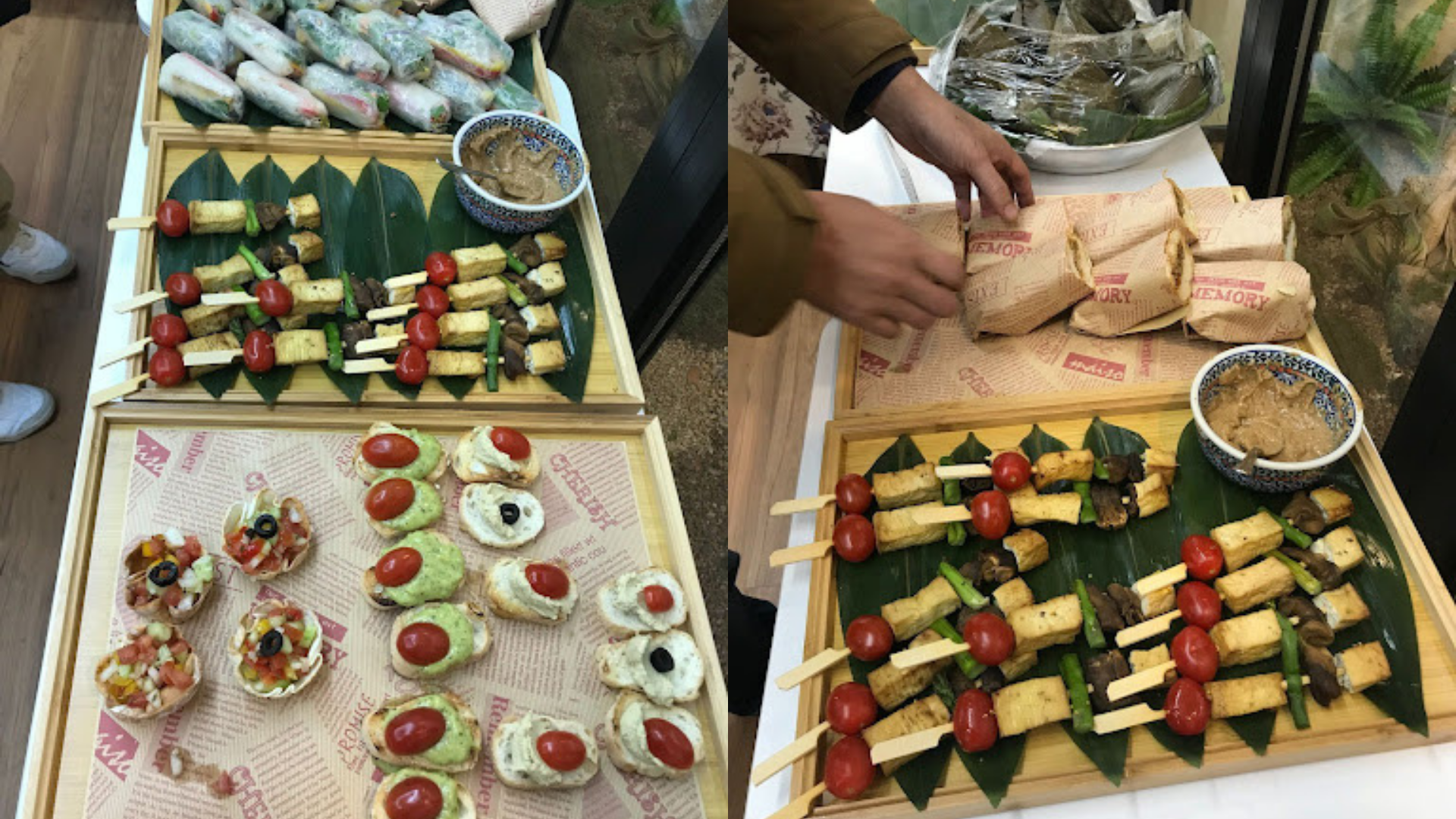
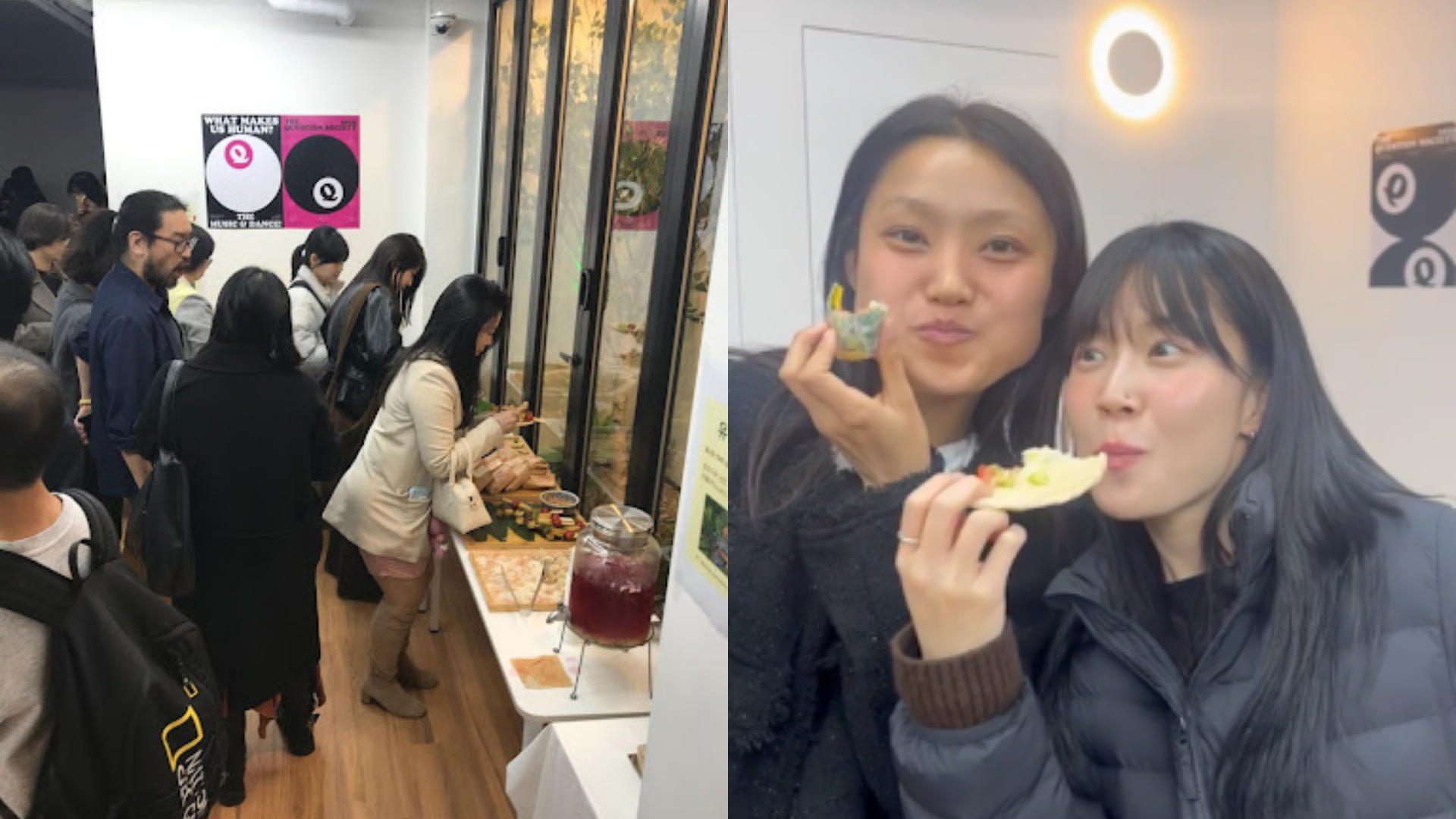
유목주방은 난민 여성 셰프들과 함께하는 한옥커즈의 새로운 케이터링 서비스입니다. 난민 여성들의 공동체를 지원하는 사업입니다. 지난 11월 15일, 그 첫 프로젝트로 인문재단 타우마제인의 철학 축제에서 케이터링을 진행했습니다. 70명 넘는 참여자들께 음식을 대접했어요. 캄보디아 난민 셰프이자 한옥커즈 멤버인 피룸이 메인 셰프로 활약했답니다!
캄보디아 요리를 중심으로 다양한 메뉴를 뷔페 스타일로 풍성하게 준비했고, 손님들 반응도 정말 좋았어요. 축제의 마무리를 장식한 DJ 파티 분위기와도 아주 잘 어울렸습니다. 남은 음식은… 하나도 없었네요! 케이터링 스탭(전원 한옥커즈 회원)들은 눈물을 머금고 다음 기회를 기약해야 했습니다. 🙂
Kitchen On The Move는 7년 동안 비건 레스토랑 ‘온더무브’를 운영했던 을지공간의 든든한 지원도 함께하고 있어요. 난민 여성 셰프들의 다양한 배경을 기반으로, 행사의 목적과 예산에 맞춰 메뉴를 제안할 수 있습니다.
(문의는 인스타그램 @hanokers 또는 @kitchen_onthemove로 DM 주세요!)
Kitchen On The Move is Hanokers’ new catering service that collaborates with refugee women chefs, with the goal of empowering their communities. On Nov. 15, Kitchen On The Move had its first catering project at Thaumazein’s philosophy festival held in Haebangchon, serving more than 70 guests. Phirum, a Cambodian refugee chef based in Ansan and a Hanokers member, was the main chef. A full menu was served, buffet-style – featuring awesome Cambodian dishes, complimented by several other dishes. Our food and hospitality was a welcome addition to the DJ party that ended the festival. After the food-lovefest, nothing was left – unfortunately, not even for the staff, all Hanokers members. 🙂
Kitchen On The Move is further supported by Eulji Space, which for seven years operated a popular vegan restaurant called “On The Move.” Working with refugee women chefs of diverse backgrounds, Kitchen On The Move can customize the menu based on an event’s purpose and budget. Inquiries can be sent by DM to @hanokers or @kitchen_onthemove.
|
|
|
💡 한옥커즈 이야기 Members' Activities |
|
|
👨🏿💻 미사경정공원에서 열린 ‘마인드 런’, 난민과 한국인을 한자리에 모으다 (베레켓)
Mind Run Brings Refugees and Koreans Together at Misari Speedboat Park (Bereket) |
|
|
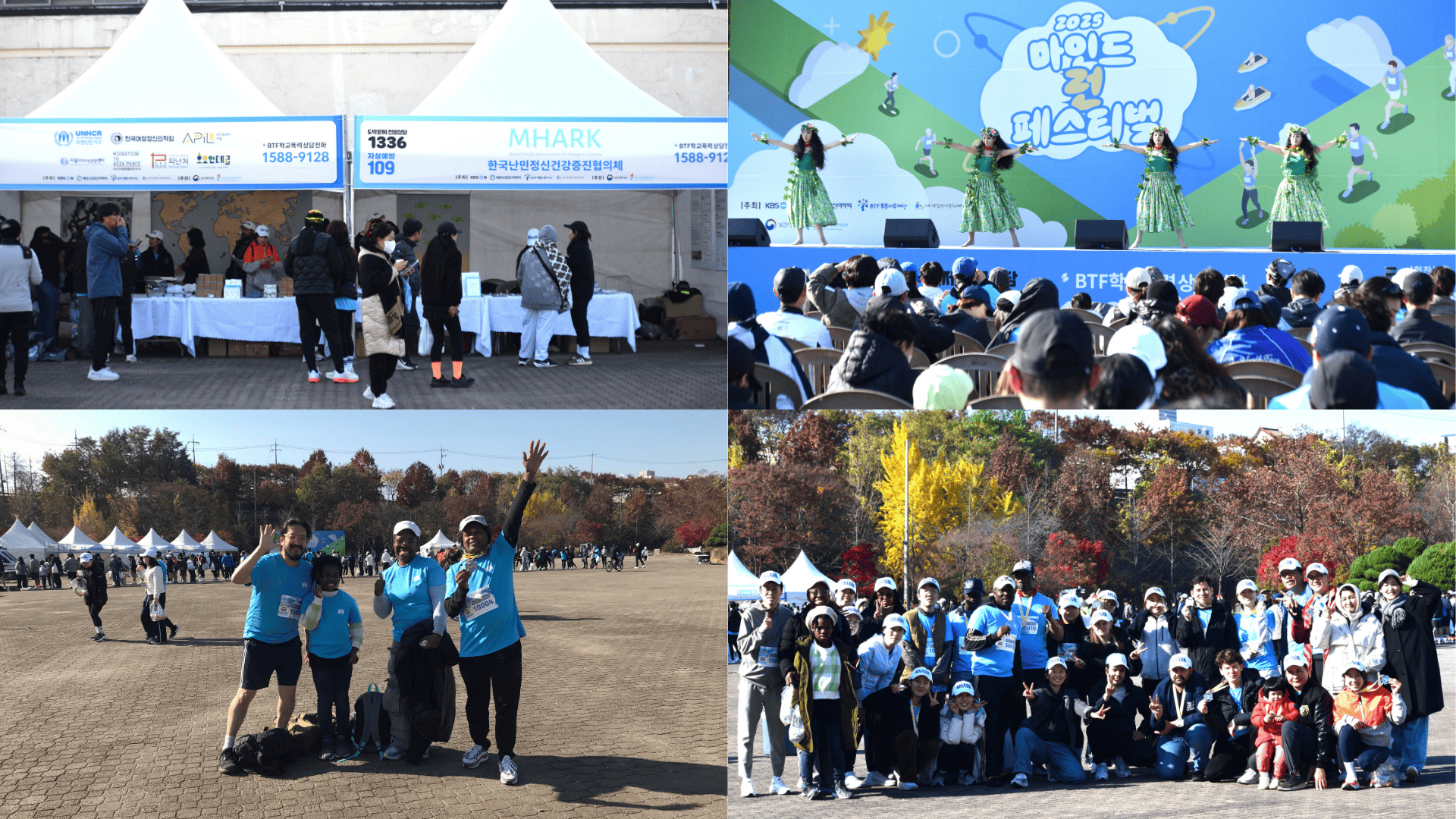
11월 16일(일) 아침, 한옥커즈 구성원들과 동료들은 MHARK와 함께하는 Mind Run 행사에 참여해 하남시 미사리 경정공원에서 5km와 10km 코스를 완주했습니다. 이번 행사는 Migration for Asia Peace에 의해 공동 주최되었으며, 한옥커즈 친구들, 난민 당사자, 그리고 한국의 지지자들이 다시 만나 서로의 안부를 확인하고, 신체적·정신적 건강을 돌보는 소중한 시간이 되었습니다.
비록 쌀쌀한 아침이었지만, 참가자들은 따뜻한 분위기 속에 환영을 받았고, 주최 측의 준비로 모든 참가자에게 메달과 다양한 기념품이 전달되었습니다. 러너들 가운데는 논산에 거주하는 아프가니스탄 난민 레자이(Rezayi)도 있었으며, 그는 다른 난민들과 함께 달리기 위해 서울을 찾았습니다. 레자이는 이날을 돌아보며, 스포츠가 신체적·정신적 건강을 증진할 뿐 아니라 사회적 관계를 강화하는 데 중요한 역할을 한다고 강조했습니다.
그는 “이 행사에는 한국 시민뿐 아니라 상당수의 외국인 주민들도 참여해 서로 다른 문화와 국적을 가진 사람들 간의 화합을 크게 도왔다”고 말했습니다.
또한 레자이는 Mind Run과 같은 행사가 난민과 한국 사회가 의미 있게 교류할 수 있는 드문 기회를 만든다며, 스포츠의 힘을 보여주는 난민들의 목소리를 강조했습니다.
“스포츠는 문화·언어·국적의 차이를 넘어 사람들을 연결하는 보편적 언어가 될 수 있습니다. 이번 행사가 매우 잘 조직된 점이 정말 기쁘고, 한국 곳곳에서 이런 행사가 더 많이 열리길 바랍니다. 이러한 행사들은 난민 커뮤니티의 긍정적이고 인간적인 모습을 보여주고, 건강한 사회 분위기를 만들며, 상호문화적 교류를 촉진합니다.”
한편 '한국 난민 정신건강 증진 프로젝트(MHARK)'는 의사들과 여러 NGO와 협력해 난민들의 정신건강을 지원하는 활동을 이어가고 있습니다. 이번 Mind Run에서는 난민과 지지자들의 참가비를 후원하고, 행사장에 부스를 운영해 한국 사회의 난민 이슈에 대한 인식을 높이는 데 힘썼습니다.
Hanokers members and colleagues took part in the Mind Run with MHARK on Sunday morning, 16 November, completing both the 5km and 10km courses at Misari Speedboat Park in Hanam City. Co-organized by Migration for Asia Peace, the event offered a meaningful opportunity for Hanokers friends, refugees, and Korean supporters to reconnect, check in on one another, and take time to care for their physical and mental well-being.
Despite a chilly morning, Participants were welcomed with a warm atmosphere, and thanks to the organizers, medals and various gifts were awarded to everyone who joined the event.
Among the runners was Rezayi, an Afghan refugee living in Nonsan City, who travelled to Seoul to participate alongside other refugees. Reflecting on the day, he emphasized the essential role of sports in promoting both physical and mental health while strengthening social relationships.
“Not only Korean citizens take part in this event, but a considerable number of foreign residents also joined, which greatly helped promote unity among people of different cultures and nationalities,” he said.
Rezayi added that events like the Mind Run create rare and valuable opportunities for meaningful interaction between refugees and the Korean community, highlighting Refugee Voices on the Power of Sports.
“Sports can serve as a universal language, bringing people together regardless of cultural, linguistic, or national differences. I am truly pleased with the organization of this event and hope that more similar events like this will be held across Korea. They present a positive and humanizing image of the refugee community, create a conducive social environment, and encourage intercultural exchange.”
Mental Health Advancement for Refugees in Korea (MHARK) continues its work alongside doctors and NGOs to support the mental well-being of refugees. For the Mind Run, MHARK covered the entry fees for refugees and their supporters and hosted a booth at the festival to raise public awareness of refugee issues in Korean society.
|
|
|
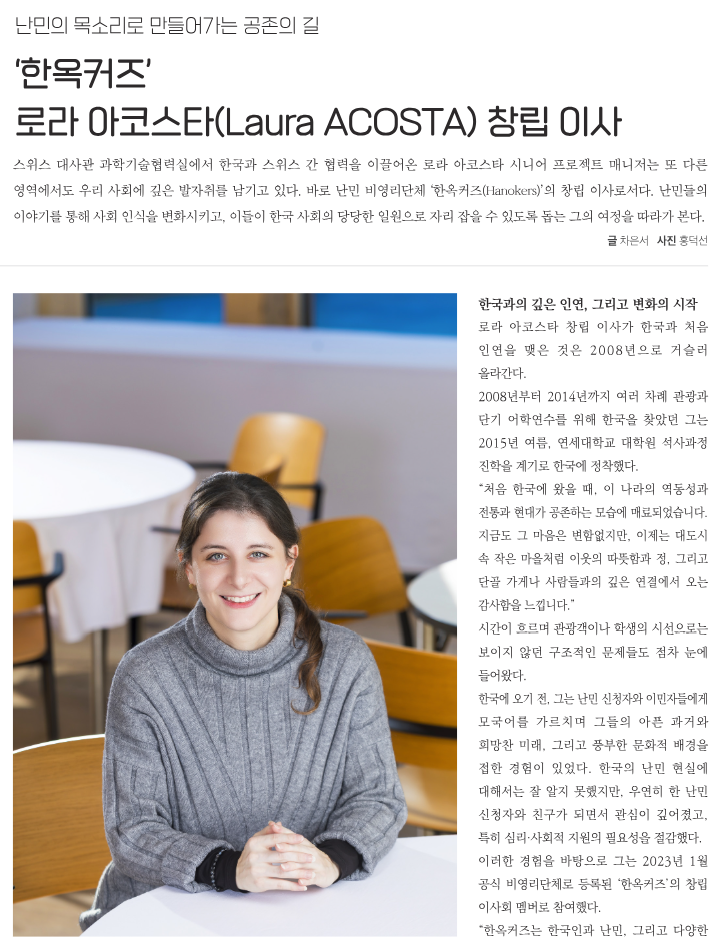
👩🎨 로라의 인터뷰: "난민의 목소리로 만들어가는 길"
Laura's interview: "The Path to Coexistence, Built by Refugee Voices" |
|
|
로라는 서울시가 국내외 독자, 특히 한국에 거주하는 외국인을 포함한 다양한 독자를 위해 발행하는 디지털 매거진 〈Seoul Life〉 11월호에서 인터뷰를 진행했습니다. 이번 기사에서는 Hanokers를 시작하게 된 계기와 그 활동의 영향, 그리고 서울을 더 포용적인 도시로 만들기 위한 로라의 생각을 다루고 있습니다.
Laura was interviewed for the November issue of 'Seoul Life', a digital magazine published by the Seoul Metropolitan Government (SMG) for both domestic and international readers, including foreign residents in Korea. The article explores the motivation and impact behind Hanokers and Laura's views on making Seoul a more inclusive city.
|
|
|
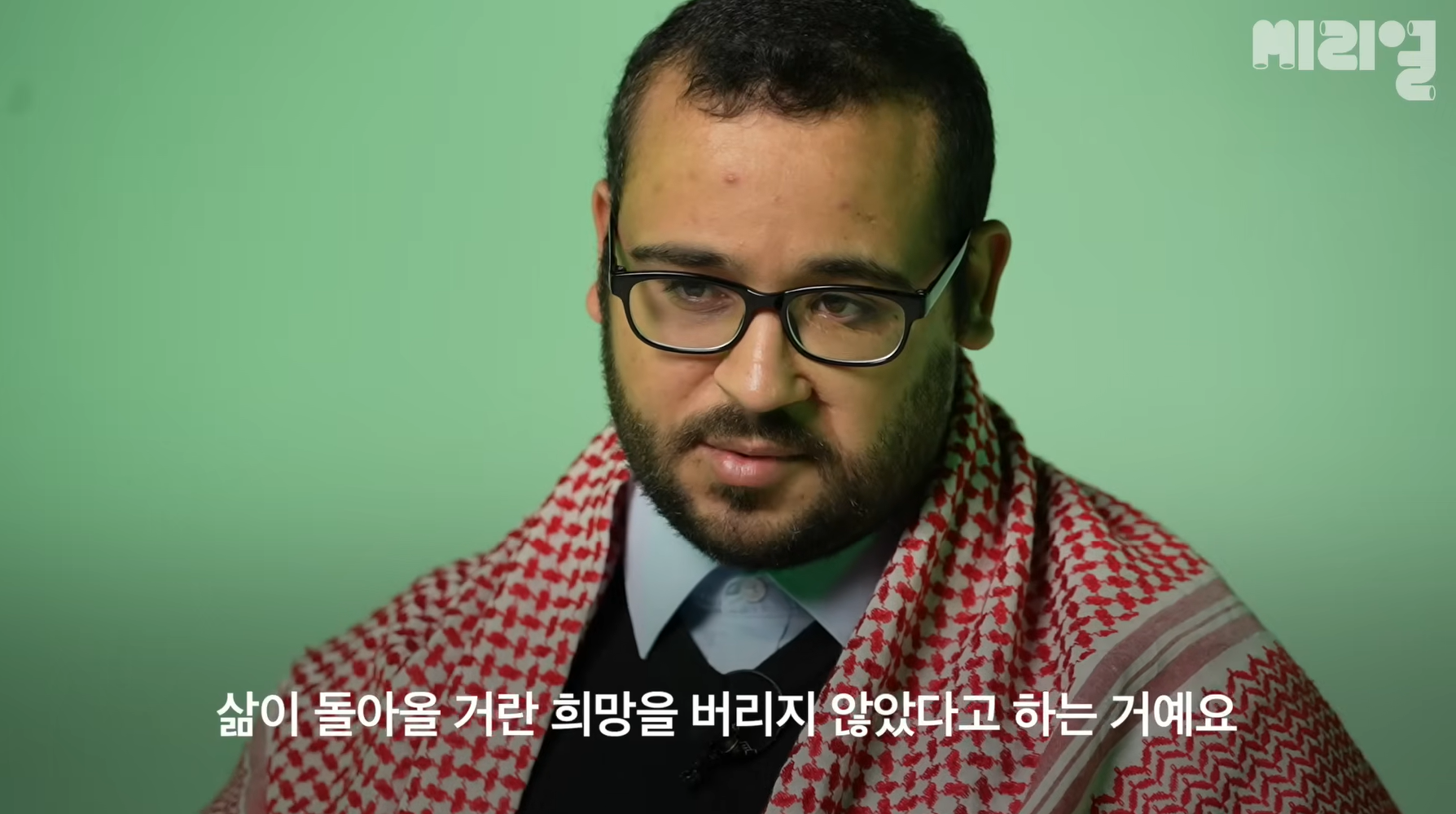
🙎🏽♂️ 살레의 인터뷰: 죽음이 일상인 땅에서도 내일을 믿는 이유
Saleh's interview: "Where Death Is Daily, Still We Believe in Tomorrowe" |
|
|
UN이 지정한 ‘국제 팔레스타인 연대의 날’(11월 29일)을 맞아, 11월 28일 유튜브 채널 '씨리얼'에서 관련 영상을 공개했습니다. 한옥커즈 멤버인 Saleh가 인터뷰에 참여해 자신의 이야기를 들려주었어요. 영상 링크를 함께 공유합니다.
In recognition of the UN-designated International Day of Solidarity with the Palestinian People (November 29), the YouTube channel 'Creal' released a related video on November 28. Saleh, a member of Hanokers, participated in the interview and shared his story. Here is the video link. |
|
|
🌹나탈리의 코너 - '한국인'이라는 단어에 대하여
🌹Nathalie’s Corner - What it means to be “Korean”
|
|
|
My name is Nathalie, and I recently attended a Hanokers event where we discussed language about immigration, and heard from student-filmmaker Blessing about her experience growing up in Korea. The following are my reflections from the event.
How can you tell who is “외국인”(foreigner) now when Korea’s demographics are changing so quickly? What Hanokers’ presentation last Monday showed is that you can’t. Blessing, the main speaker of the KUHRS event, has spent most of her life in Korea. Although she was born in a different country, her family, friends, and future are here.
What it means to be Korean is changing. “Koreanness” is more than a question of race and geography, but also individual choice. The choice to come to Korea and make a life here, to put down roots, to be part of society. It’s people that cross borders, and people that transcend them.
But it’s not just the choice of immigrants to come here that matters — it’s also a matter of word choice. Rather than using words like “foreigner” to describe all racial outsiders to Korea, we should move towards language that recognizes the possibility of permanent residence.
The media plays an important role in how it labels “outsiders” in images and headlines. Even the word “multicultural,” as Blessing reflected, implies that different cultures stay separate, when in fact they interact with and influence each other. As Korean culture spreads abroad, so it becomes shaped by the local audiences who interact with it. The same is true here as foreign cultures make a home in Korean spaces.
The all-encompassing label of “foreigner” comes from a monoethnic perspective. Immigration becomes a binary of ethnic insider-outsider. But immigration, in actuality, is more like a scale: on one end lies foreign-born permanent residents, and on the other visiting workers. From this perspective, children born in Korea to “multicultural” families are not “foreigners” at all. “Foreigner” as we use it today refers more to perceived ethnicity than to lived belonging.
What are better words we can use to describe Korea as a multiethnic society? The immigration rate into Korea is growing still, with the foreign resident population peaking at 2.8 million earlier this fall. Although Korea has only been an immigrant-receiving country for a few decades, its history as a nation far precedes its statehood. The endurance of Korean identity through centuries of the intervention of foreigners attests to its adaptability. Now is no different except in the intent of the foreigners arriving to Korea’s shores — to participate in Korean culture rather than to change it. 함께 나눌까요?
Note: Nathalie Marver-Kwon is a visiting scholar at Hankuk University of Foreign Studies, where she researches immigration of the Korean diaspora. All views presented are her own.
제 이름은 나탈리입니다. 최근에 Hanokers에서 열린 행사에 참석해, 이주를 둘러싼 언어에 대해 이야기하고, 한국에서 자라온 학생 영화감독 블레싱의 경험을 들을 기회를 가졌습니다. 아래는 그날 행사에서 제가 느낀 바를 정리한 내용입니다.
요즘처럼 한국의 인구 구성이 빠르게 바뀌는 시대에, 누가 ‘외국인’인지 어떻게 구분할 수 있을까요? 지난 월요일 Hanokers의 발표는 그 답이 사실상 “구분할 수 없다”였습니다. KUHRS 행사에서 주요 연사로 나선 블레싱은 삶의 대부분을 한국에서 보냈습니다. 비록 다른 나라에서 태어났지만, 그의 가족도, 친구도, 미래도 모두 한국에 있습니다.
‘한국인’이라는 의미는 변화하고 있습니다. 한국다움은 인종이나 국적만으로 설명되지 않아요. 한국에 오고, 여기서 삶을 꾸리고, 뿌리를 내리고, 사회의 일원이 되겠다는 개인의 선택 역시 중요한 부분입니다. 국경을 넘는 것은 사람이고, 때로는 그 국경을 뛰어넘는 것도 사람입니다.
하지만 중요한 것은 이주민의 선택뿐만이 아닙니다. 우리가 사용하는 단어의 선택도 중요합니다. 한국 사회에서 모든 비한국인을 싸잡아 ‘외국인’이라고 부르는 대신, 이곳에 영구적으로 살아갈 가능성을 인정하는 언어로 바뀌어야 합니다.
미디어 역시 이미지와 제목을 통해 ‘외부인’을 어떻게 규정하느냐에 큰 영향을 미칩니다. 블레싱이 말했듯, ‘다문화’라는 말조차 서로 다른 문화가 분리되어 존재한다는 뉘앙스를 줍니다. 하지만 실제로는 서로 부딪히고, 영향을 주고받으며 변해갑니다. 한국 문화가 해외로 퍼져나가는 과정에서도 현지 사람들이 어떻게 접하고 해석하느냐에 따라 새롭게 모습이 만들어지듯, 한국 안에서도 다른 문화들이 자리 잡으며 한국 사회와 상호작용하고 있습니다.
‘외국인’이라는 모든 것을 덮어버리는 단어는 일종의 단일민족적 관점에서 비롯된 것입니다. 이주를 ‘안에 있는 사람 vs. 밖에 있는 사람’이라는 이분법으로 나누는 식이죠. 하지만 실제 이주는 연속선에 가깝습니다. 한쪽 끝에는 외국에서 태어난 영주 거주자들이 있고, 다른 끝에는 단기 방문 노동자가 있습니다. 이런 관점에서 보면, 한국에서 태어난 ‘다문화 가정’의 아이들은 애초에 ‘외국인’이 아닙니다. 지금 우리가 쓰는 ‘외국인’이라는 단어는 실제 삶의 소속감보다는 겉으로 보이는 민족성을 가리키는 경우가 더 많습니다.
그렇다면 한국 사회의 다민족적 현실을 어떻게 더 정확히 표현할 수 있을까요? 한국의 이주율은 여전히 증가하고 있고, 올가을에는 외국인 주민 수가 280만 명에 달했습니다. 한국이 본격적인 이민자 수용국이 된 지는 수십 년밖에 되지 않았지만, ‘한국’이라는 정체성은 그보다 훨씬 오래전부터 이어져 왔습니다. 수세기 동안 수많은 외부의 영향 속에서도 한국 정체성이 유지되어온 것은 그만큼 유연하고 적응력이 뛰어나다는 뜻입니다. 지금 한국에 오는 사람들도 한국 문화를 바꾸기 위해 오는 것이 아니라, 그 일부가 되고 싶어 찾아오는 점에서 과거와 다릅니다. 함께 나눌까요?
Note: 나탈리 마버-권은 한국외국어대학교에서 연구 활동을 하고 있는 방문 연구원으로, 재외동포의 이주를 연구하고 있습니다. 본 글은 모두 그의 개인적 견해입니다.
|
|
|
💌
한옥커즈 회원이 되어주세요!
Become a Member of Hanokers!
난민들이 재능과 열정을 살려 삶을 주체적으로 선택하고 이끌 수 있게 노력하는 한옥커즈! 🌟
우리의 여정에 함께할 멤버십 회원을 찾습니다!
Hanokers is a community that empowers refugees to pursue their lives with passion, talent, and self-determination. 🌟We’re looking for members who want to walk alongside us on this meaningful journey. |
|
|
이 뉴스레터는 한옥커즈 행사에 참여해주신 분들께 발송됩니다.
한옥커즈의 소식을 받고 싶지 않으신 분들은 아래 버튼을 통해 수신 거부하실 수 있습니다.
You are receiving this newsletter because you previously participated in a Hanokers event.
If you no longer wish to receive communications from us, you may unsubscribe at any time.
|
|
|
|
|